8/6/2023
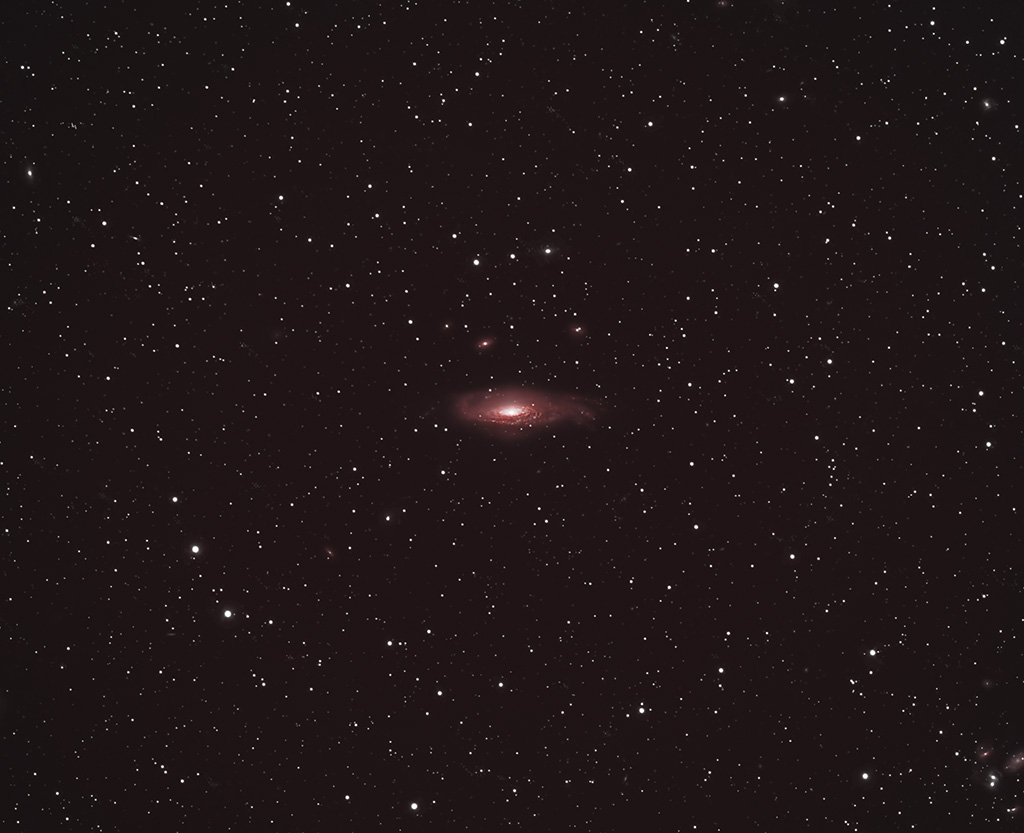
NGC 7331, also known as Caldwell 30, is an unbarred spiral galaxy about 40 million light-years away in the constellation Pegasus. It was discovered by William Herschel in 1784. Wikipedia
Imaging Data:
Provo, Utah
Bortle 5 sky
Date: 8/4/2023
Image: NGC 7331
Size:=10.2’
Magnitude=9.5
Exposure= 180 seconds x 120 of which 57 were used for a total of 2h 51m
Binning = 1×1
Camera Temperature= 0 deg C
Camera Gain= 100
Filter= IDAS-NBZ Narrowband Filter
Camera: ASI2600MC PRO in Hyperstar IV configuration.
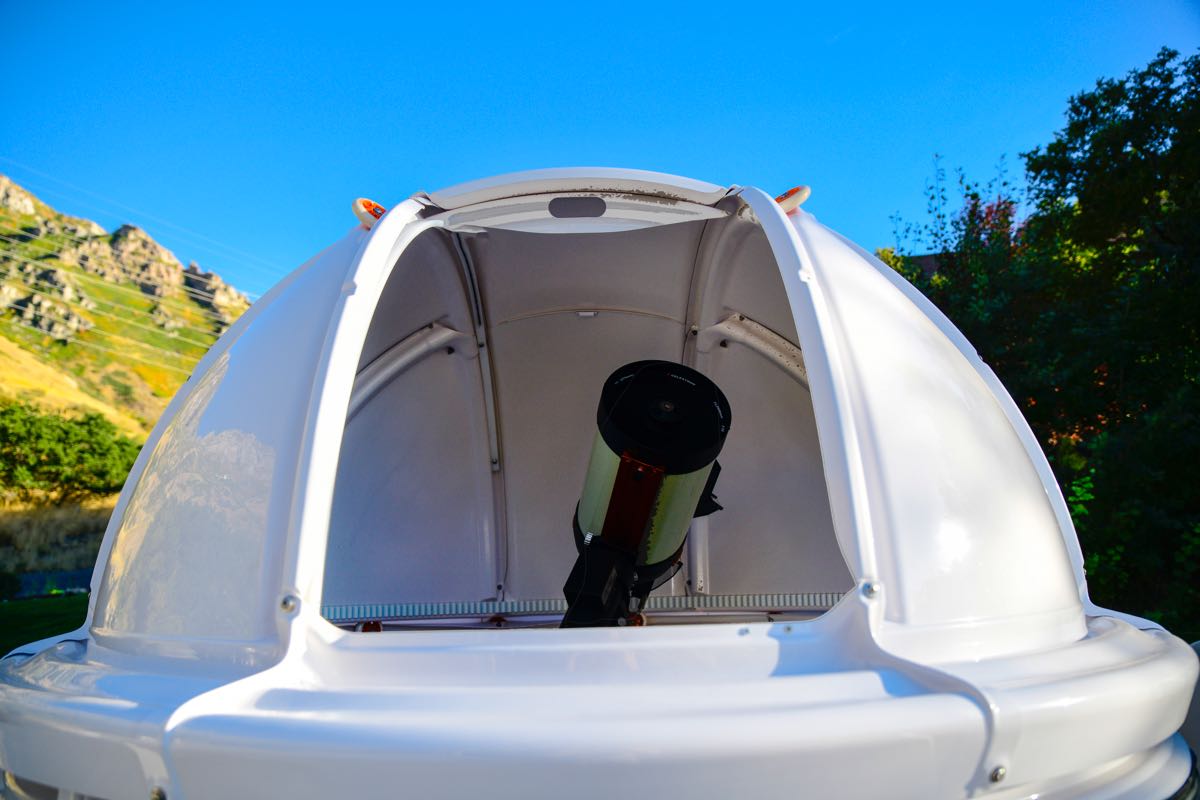
Telescope: Celestron 1100 Edge HD
Mount: 10Micron GM1000HPS
Processed with DSS, PI and PS
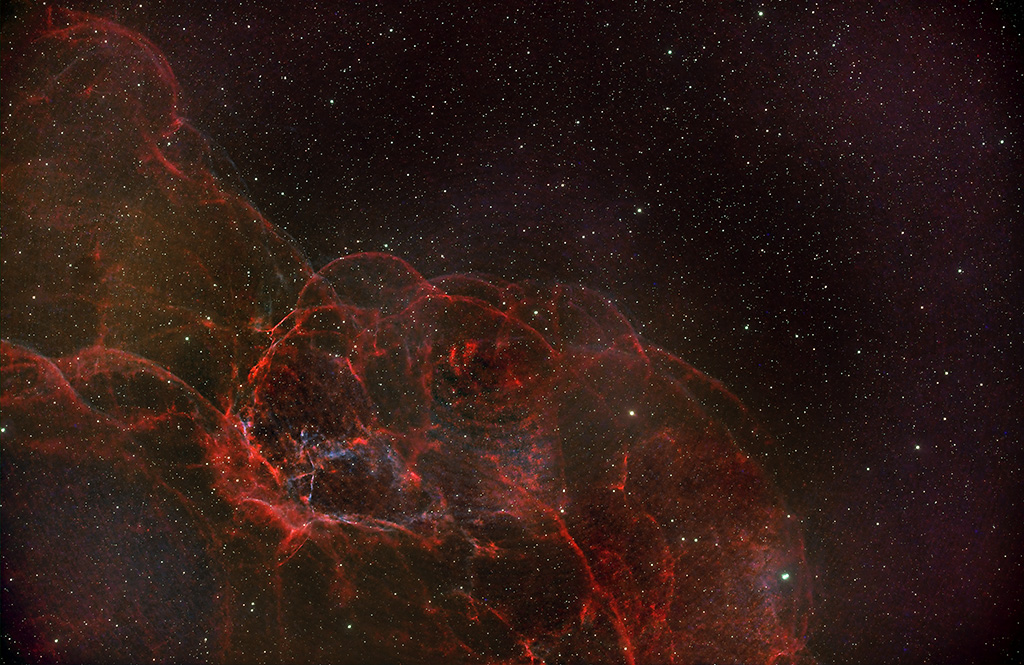
Sharpless 2-240, also known as the Spaghetti Nebula, is a supernova remnant (SNR) in the Milky Way, straddling the border between the constellations Auriga and Taurus. It was discovered in 1952 at the Crimean Astrophysical Observatory by Grigory Shajn and his team using a Schmidt camera and a narrowband filter close to the Hydrogen Alpha transmission line. It is difficult to observe due to its extremely low brightness. This discovery was part of a survey conducted between 1945 and 1955, most likely using captured German equipment, as the observatory was practically destroyed during WWII. The Schmidt camera had a field of view of 175'. Many previously unknown hydrogen nebula were discovered this way, as they are not readily visible in regular photographs.
The nebulous area has an almost spherical shell and a filamentary structure. The remnant has an apparent diameter of approximately 3 degrees, an estimated distance of approximately 3000 (±350) light-years, and an age of approximately 40,000 years. At that distance, it spans roughly 160 lightyears.
It is believed that the stellar explosion left behind a rapidly spinning neutron star known as pulsar PSR J0538+2817 in the nebula core, emitting a strong radio signal. Wikipedia
IMAGING DATA
Provo, Utah
Bortle 5 sky
Date: 12/20/2023
Image: SH 2-240 (partial image)
Size: 3 deg
Camera: ZWO ASI2600 MC Pro in Hyperstar Position
Filter: STC Astro Duo-Narrowband
Temperature: 0 deg C
Gain: 100
Binning: 1×1
Exposure: 180 seconds
# of Lights: 128 for 6 hours 24 minutes were used.
Telescope: Celestron 1100 Edge HD
Hyperstar IV Camera mount
Mount: 10Micron GM1000HPS
Pier: Steel pier on 600 lb concrete block
Observatory: NexDome “Y Mountain Observatory”
Software used
Deep Sky Stacker, Pixinsight, Photoshop
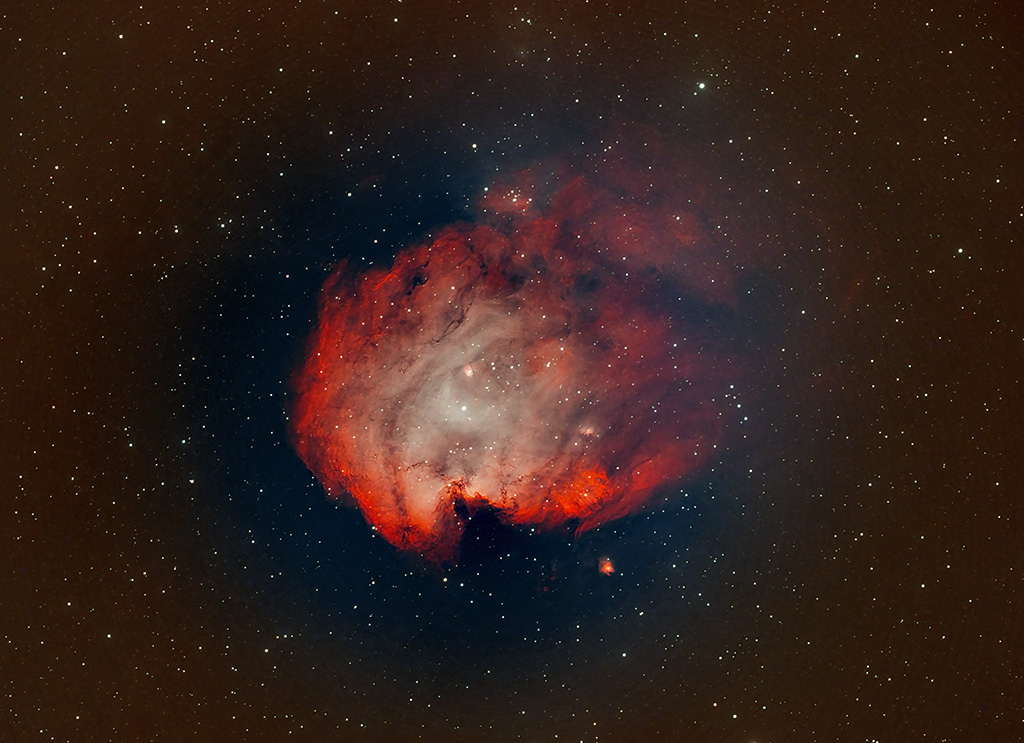
1/1/2023 Open Cluster NGC 2175 (also known as OCL 476 or Cr 84, or the monkey head nebula) is an open cluster in the Orion constellation, embedded in a diffusion nebula. It was discovered by Giovanni Batista Hodierna before 1654 and independently discovered by Karl Christian Bruhns in 1857. NGC 2175 is at a distance of about 6,350 light years away from Earth. Wikipedia
IMAGING DATA
Provo, Utah
Bortle 5 sky
Date: 12/25&31/2023
Image: NGC 2175
Size: 40’
Camera: ZWO ASI2600 MC Pro in Hyperstar Position
Filter: STC Astro Duo-Narrowband
Temperature: 0 deg C
Gain: 100
Binning: 1×1
Exposure: 180 seconds
# of Lights: 119 for 5 hours 57 minutes were used.
Telescope: Celestron 1100 Edge HD
Hyperstar IV Camera mount
Mount: 10Micron GM1000HPS
Pier: Steel pier on 600 lb concrete block
Observatory: NexDome “Y Mountain Observatory”
Software used
Deep Sky Stacker, Pixinsight, Photoshop