11/15/2026
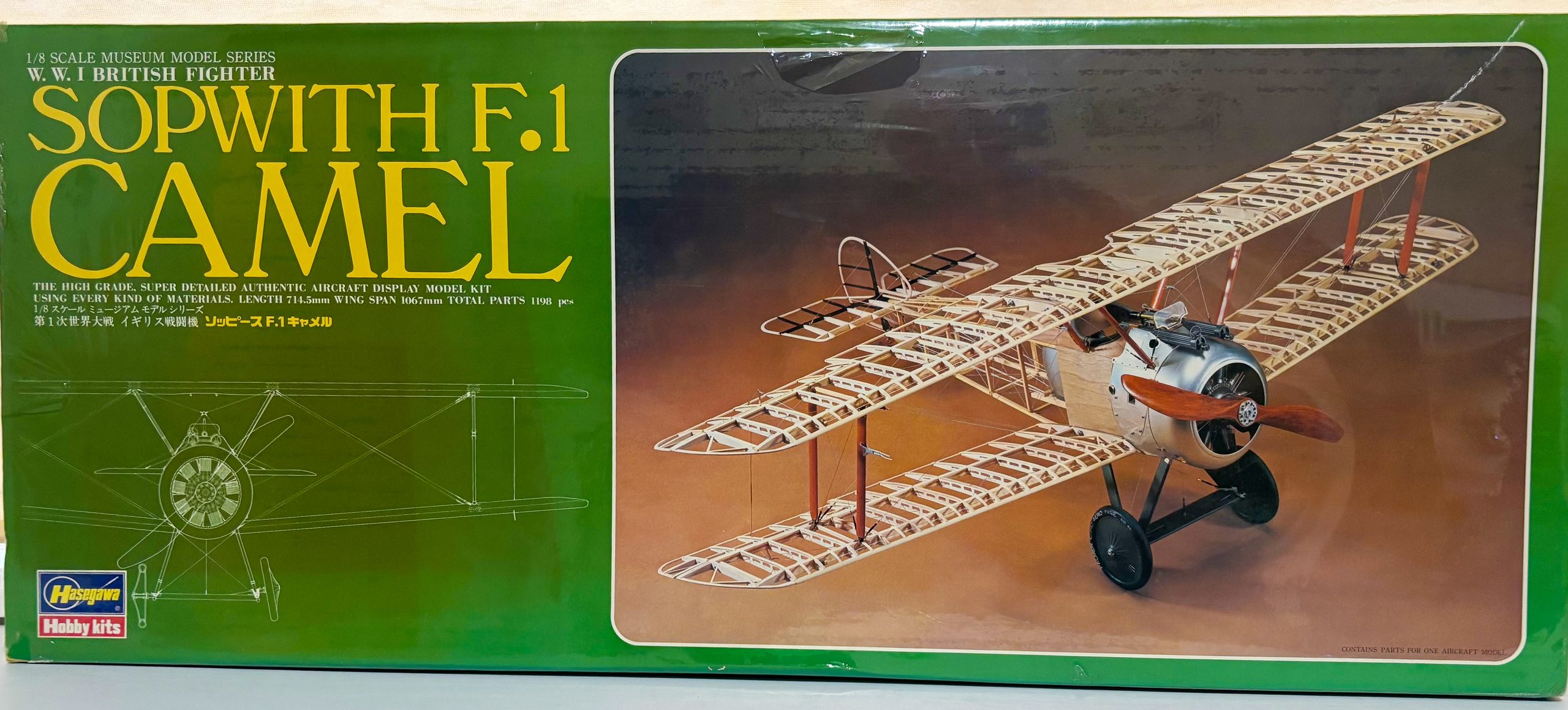
Last month (October 2026), I purchased this Hasegawa 1/8 scale model of the WW1 biplane called the Sopwith Camel, and it is huge. I think the wingspan is 42 inches! This model was produced by the Japanese model company Hasegawa around 1980. Here is a little background on this plane:
A Brief History of the Sopwith Camel
The Sopwith Camel was one of the most famous fighter aircraft of the First World War. Developed in Britain by the Sopwith Aviation Company as a successor to the Sopwith Pup, its prototype first flew in December 1916. The single-seat biplane entered combat service in the summer of 1917, when Allied airmen needed an effective answer to increasingly capable German fighters. Its unusual nickname came from the hump-shaped fairing over the two synchronized Vickers machine guns mounted directly ahead of the cockpit.
The Camel was a remarkable dogfighter, but it was not an easy airplane to fly. Its rotary engine and the concentration of much of its weight near the nose made it extremely responsive, allowing experienced pilots to turn and maneuver rapidly in combat. Those same characteristics could be unforgiving for beginners, especially during takeoff or a developing spin. Despite these dangers, the Camel proved highly successful over the Western Front. It also served in home defense, ground-attack missions, and naval operations, including a specially adapted shipboard version.
By the Armistice in November 1918, approximately 5,490 Sopwith Camels had been built, and the type was credited with destroying 1,294 enemy aircraft—more than any other Allied fighter of the war. Famous Camel pilots included Canadian ace William Barker, while American squadrons also flew the aircraft in combat. More advanced fighters gradually replaced the Camel, but its combination of outstanding maneuverability, demanding handling, and impressive combat record secured its place in aviation history. Today, surviving examples and carefully built replicas preserve the story of this extraordinary wooden-and-fabric fighter.
Sources: Royal Air Force Museum, “Sopwith F1 Camel”; Smithsonian National Air and Space Museum, “Sopwith F.1 Camel”; National Museum of the U.S. Air Force, “Sopwith F-1 Camel”.
This is the box it came in:
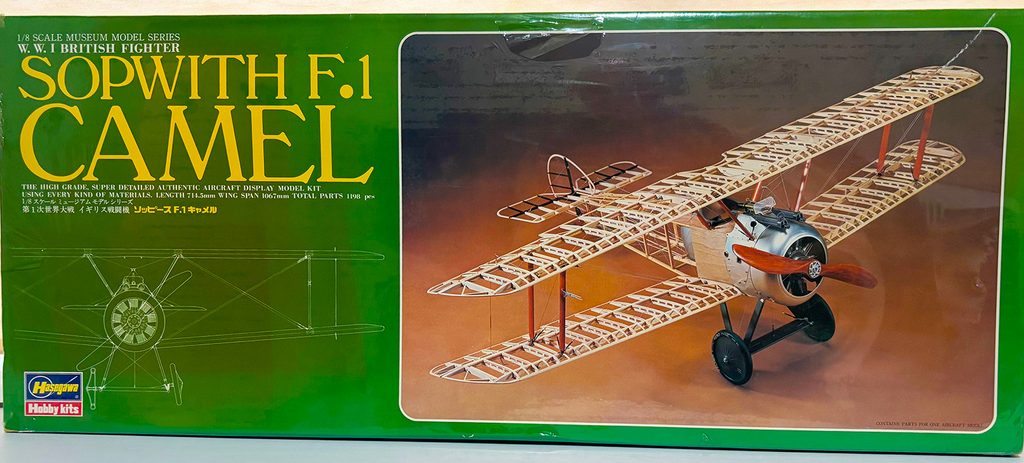
I was fortunate to get a model that still had the cellophane covering so it was pristine inside.
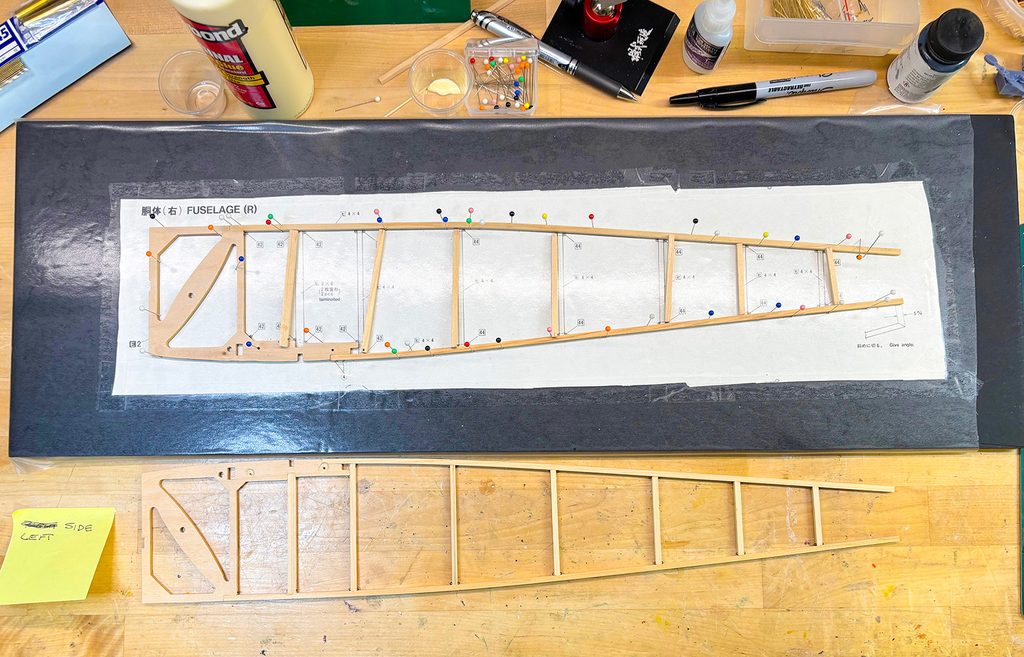
Here are some build photos:
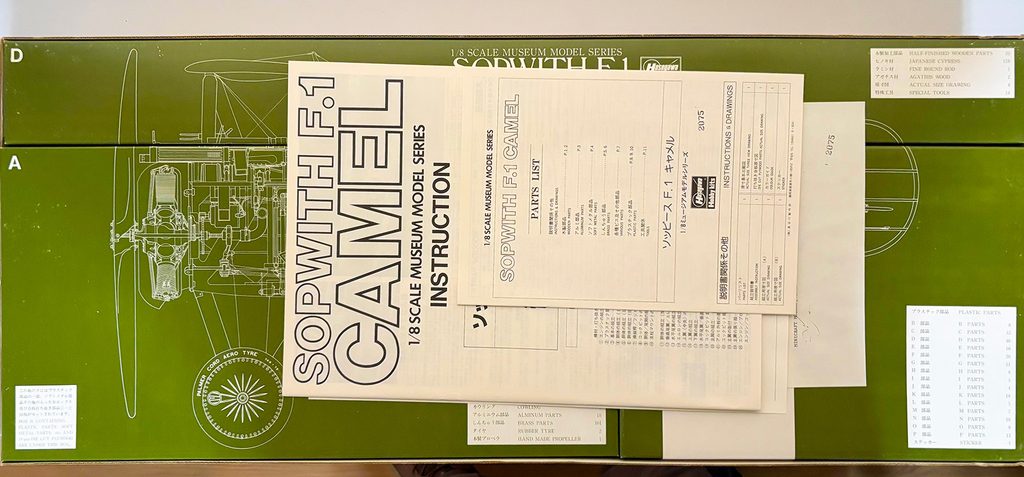
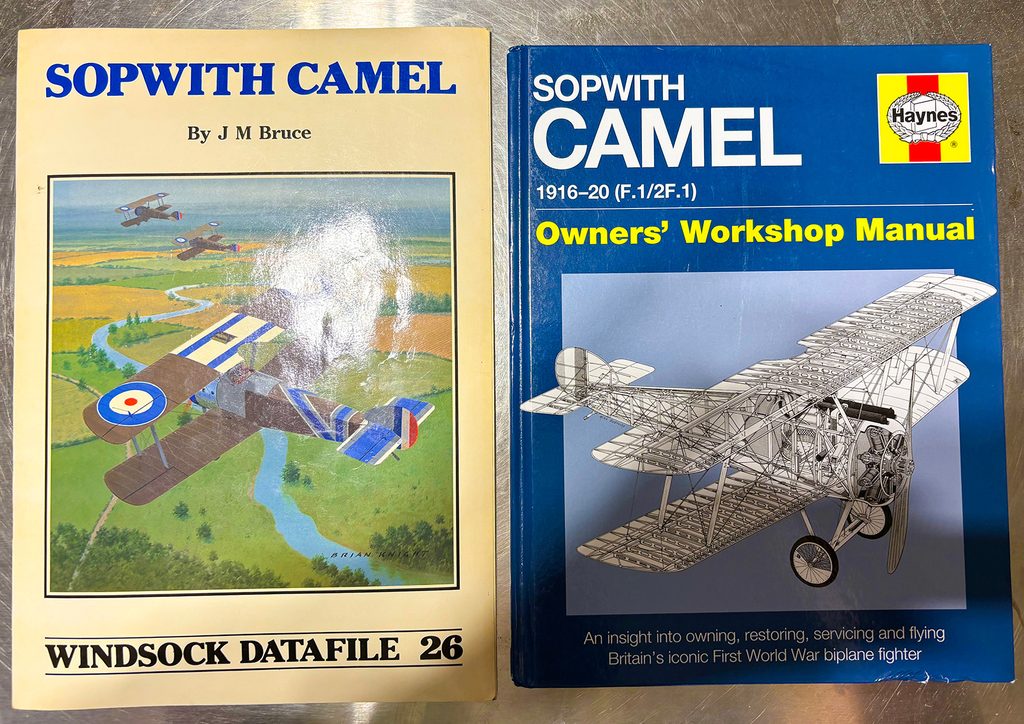
Here are the references I am using:
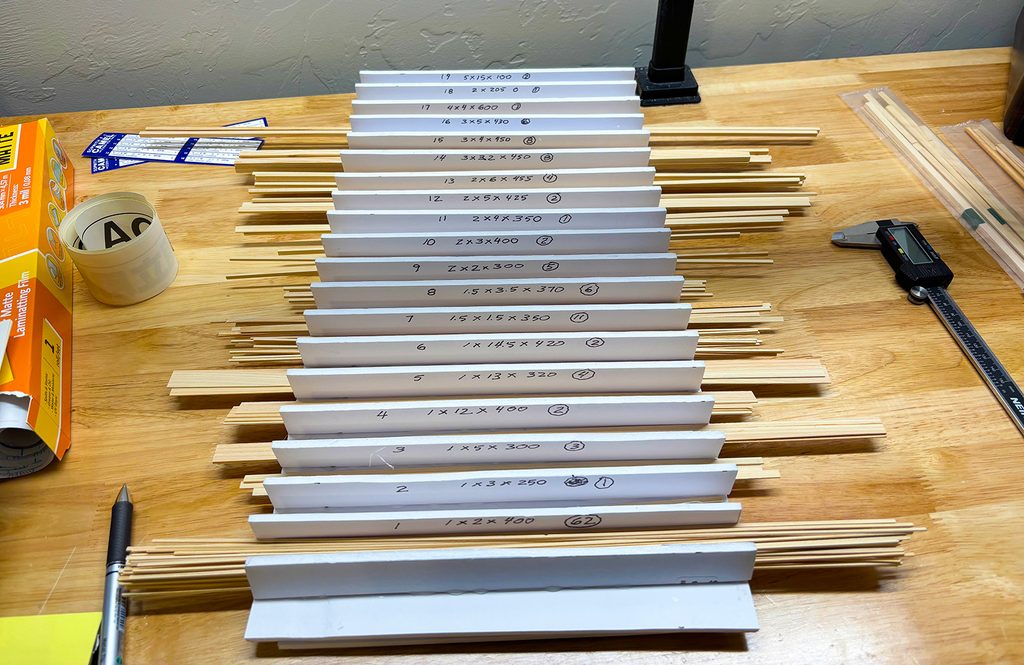
There are a lot of different sizes of wood parts to keep track of so I built a storage bracket to hold them:
Leave a Reply
You must be logged in to post a comment.